
Nervous System Testing
Nervous system balance, also known as autonomic balance, refers to the relationship between the sympathetic nervous system (“fight or flight”) and the parasympathetic nervous system (“rest and digest”). This balance is essential for maintaining homeostasis—the body’s internal equilibrium—and adapting to constantly changing demands, both inside and outside the body.
When the autonomic nervous system is not functioning optimally, it can affect multiple body systems, including the cardiovascular, metabolic, neurological, and gastrointestinal systems. Autonomic dysfunction has been associated with a wide range of health conditions, including inflammatory, autoimmune, and neuropsychiatric disorders.
These conditions include:
Nerve Express Testing
The Nerve Express test assesses autonomic nervous system function and physiological stress. It evaluates how well the body responds to stress, recovers from exertion, and the balance between sympathetic (fight-or-flight) and parasympathetic (rest-and-digest) branches of the nervous system. It is a non-invasive test done in the office that takes about 15 minutes.
What the Results Can Reveal
The results can show whether a person is stuck in sympathetic overdrive or has weakened parasympathetic tone. These conditions can underlie chronic issues such as anxiety, insomnia, digestive problems, and fatigue.
Sample Report Interpretation
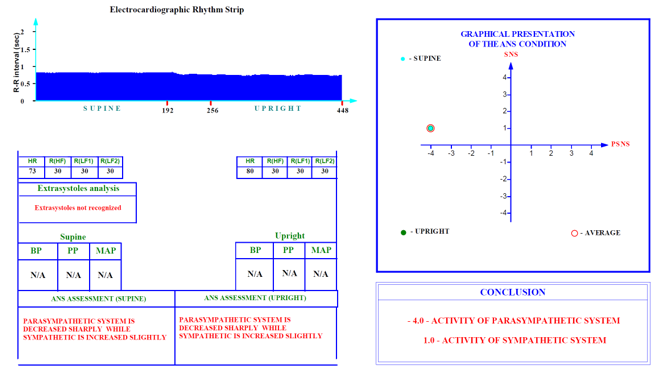
- Parasympathetic activity: −4.0
- Sympathetic activity: 1.0
In the sample report, chronic anxiety has depleted the patient’s nervous system, resulting in low parasympathetic tone and an inability to achieve homeostasis. Treatment focused on techniques to stimulate parasympathetic activity.
Appointments
For current clients or a free 15-minute consultation
